4D Number Plates: What UK Law Really Allows
The short answer: Yes, 4D number plates are legal in the UK, provided they are made correctly and meet the same rules as any other number plate. The raised characters must be:
- a single shade of solid black
- non-reflectiv
- no thicker than 3mm
- fixed permanently over a fully printed registration
They must also use the standard font and spacing, and the plate must be made to BS AU 145e with the correct supplier markings. If a plate breaks these rules, you can be fined up to £1,000, and the vehicle will fail its MOT.
Key takeaways
- Legal: solid black raised characters no thicker than 3mm, bonded over a printed registration, in the standard font and spacing, on a BS AU 145e plate from a registered supplier.
- Illegal: coloured, clear, carbon-effect, two-tone or highlighted digits, oversized digits, altered spacing and missing markings.
- Penalty: a fine of up to £1,000 and an MOT failure.
Raised-character plates have become one of the most popular upgrades on UK roads. They also generate more questions, and more misinformation, than almost any other plate style. Some sellers call every 4D plate "100% road legal"; others warn that any raised plate will get you stopped. Neither is quite right.
As one of the UK's most established number plate manufacturers and trade suppliers, we make 4D plates every day. We work with dealerships, fleet operators and resellers who can't afford to get compliance wrong. This guide sets out what the law actually says, explains why certain styles are illegal, and shows you how to check a plate before it goes on a vehicle.
What Are 4D Number Plates?
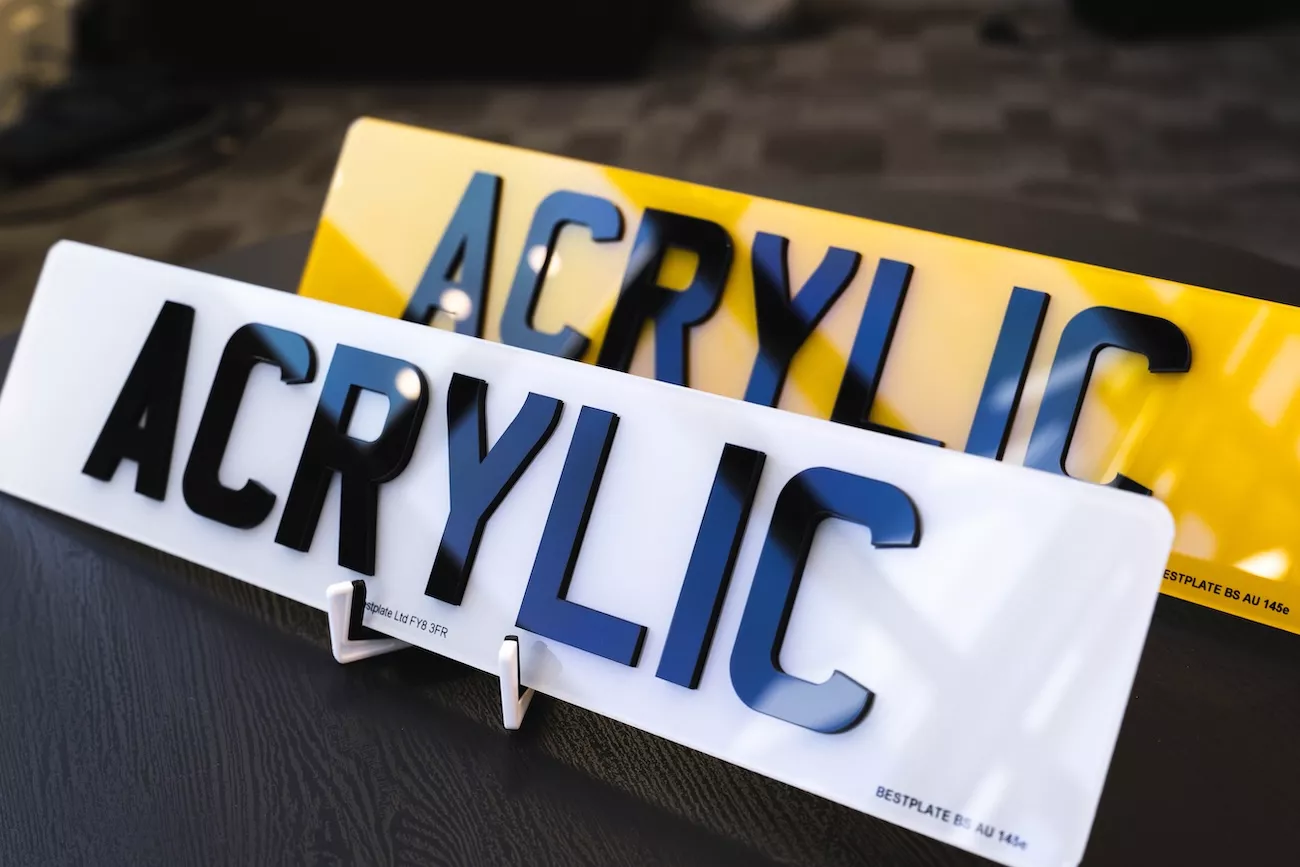
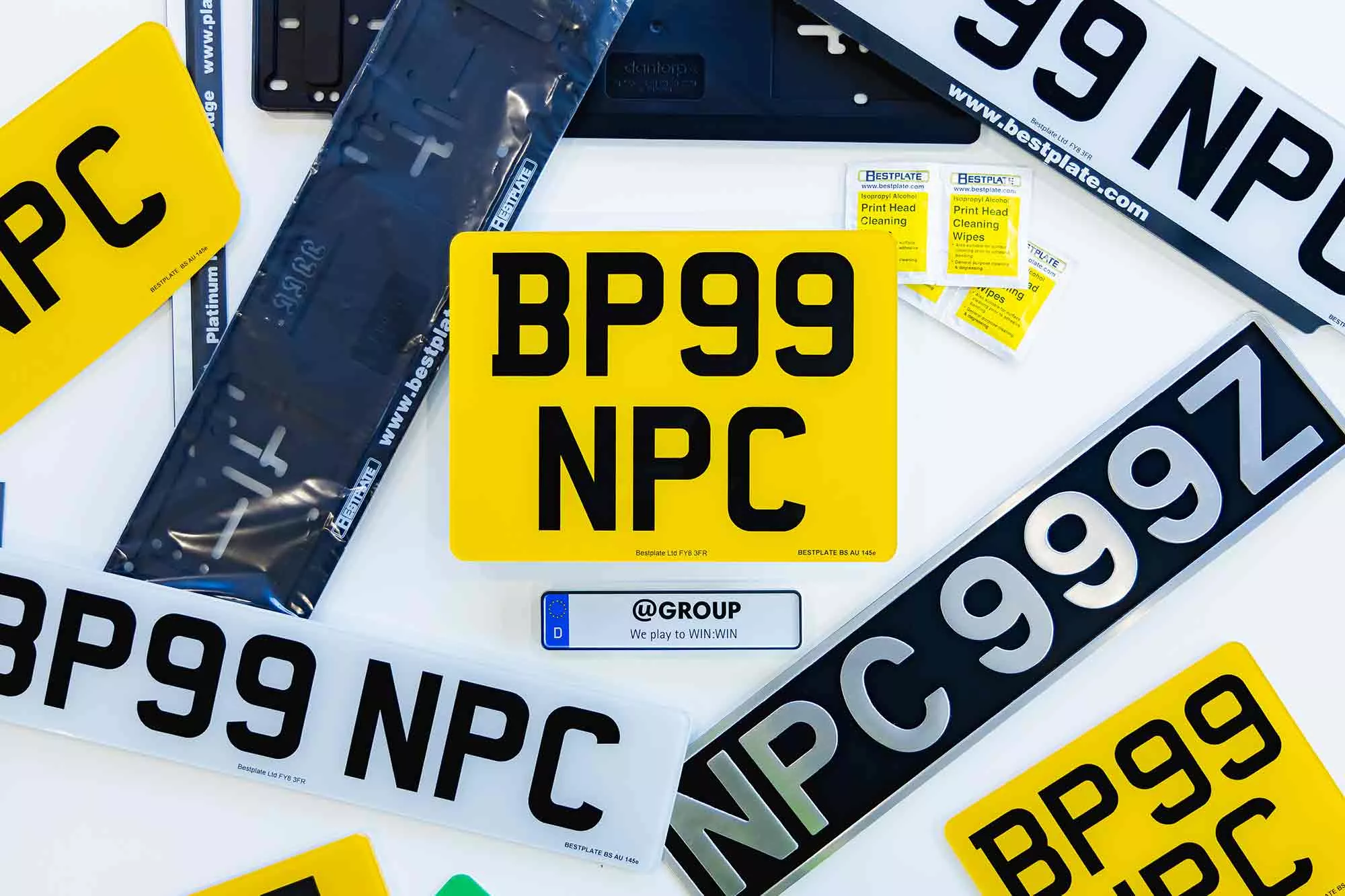
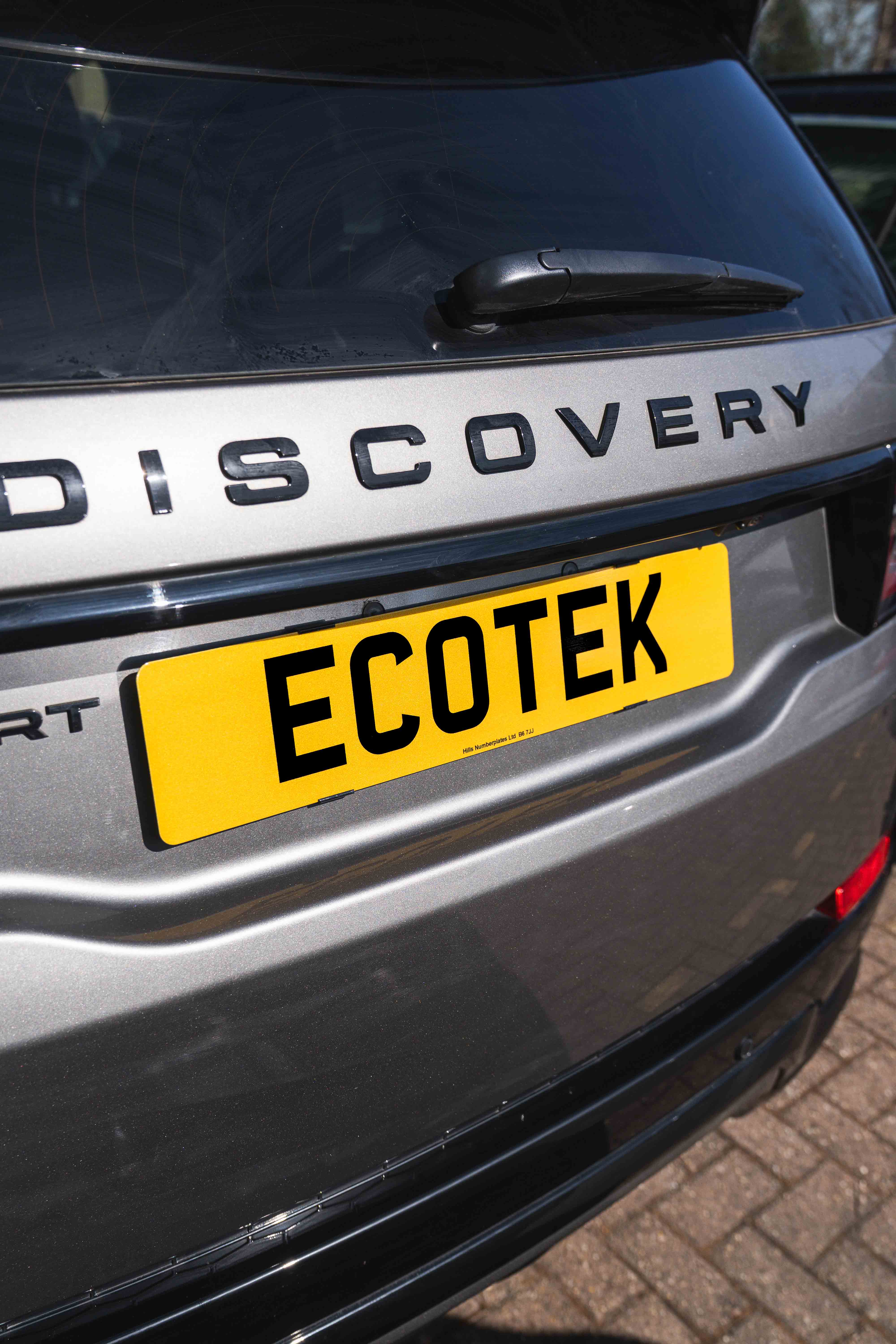
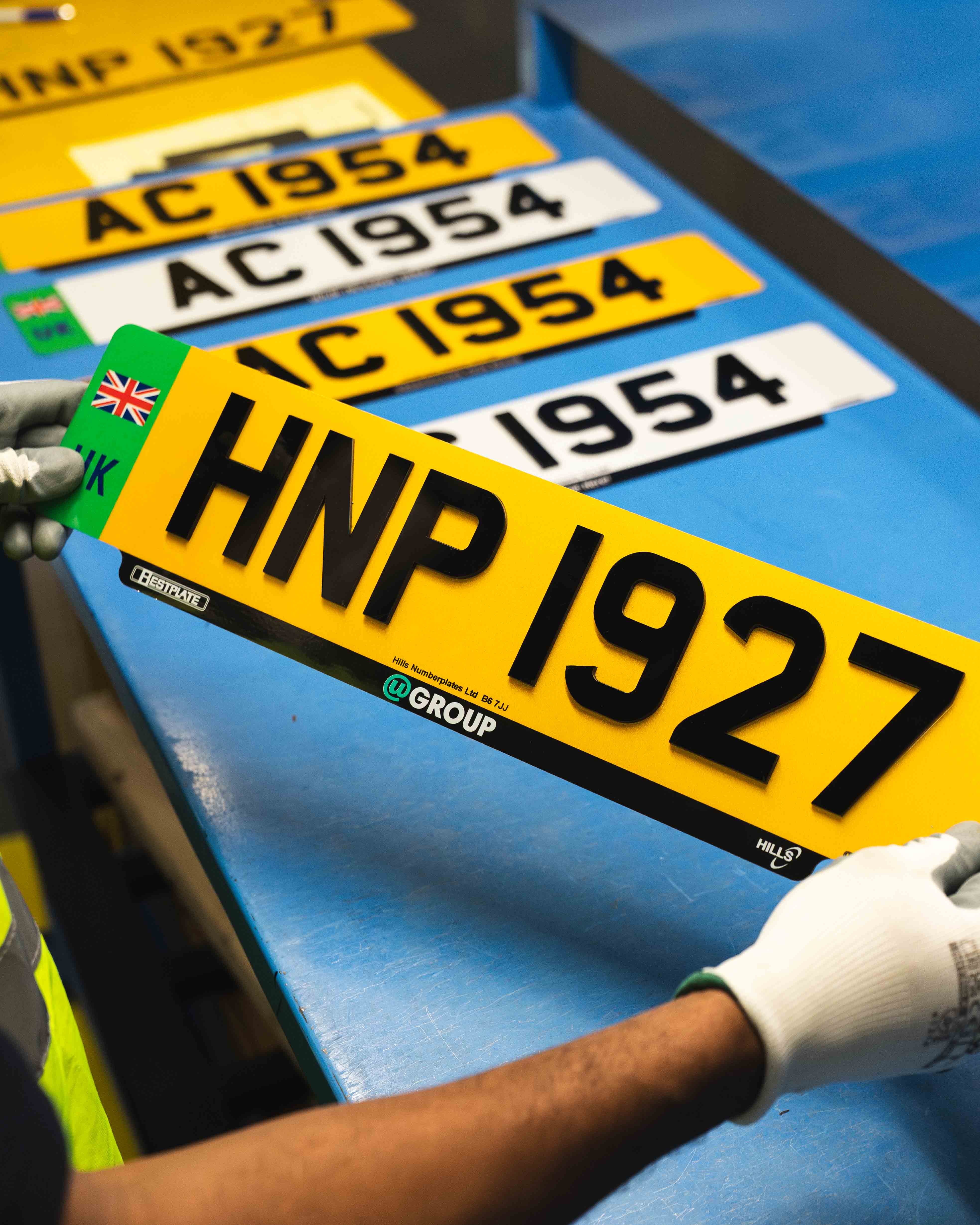
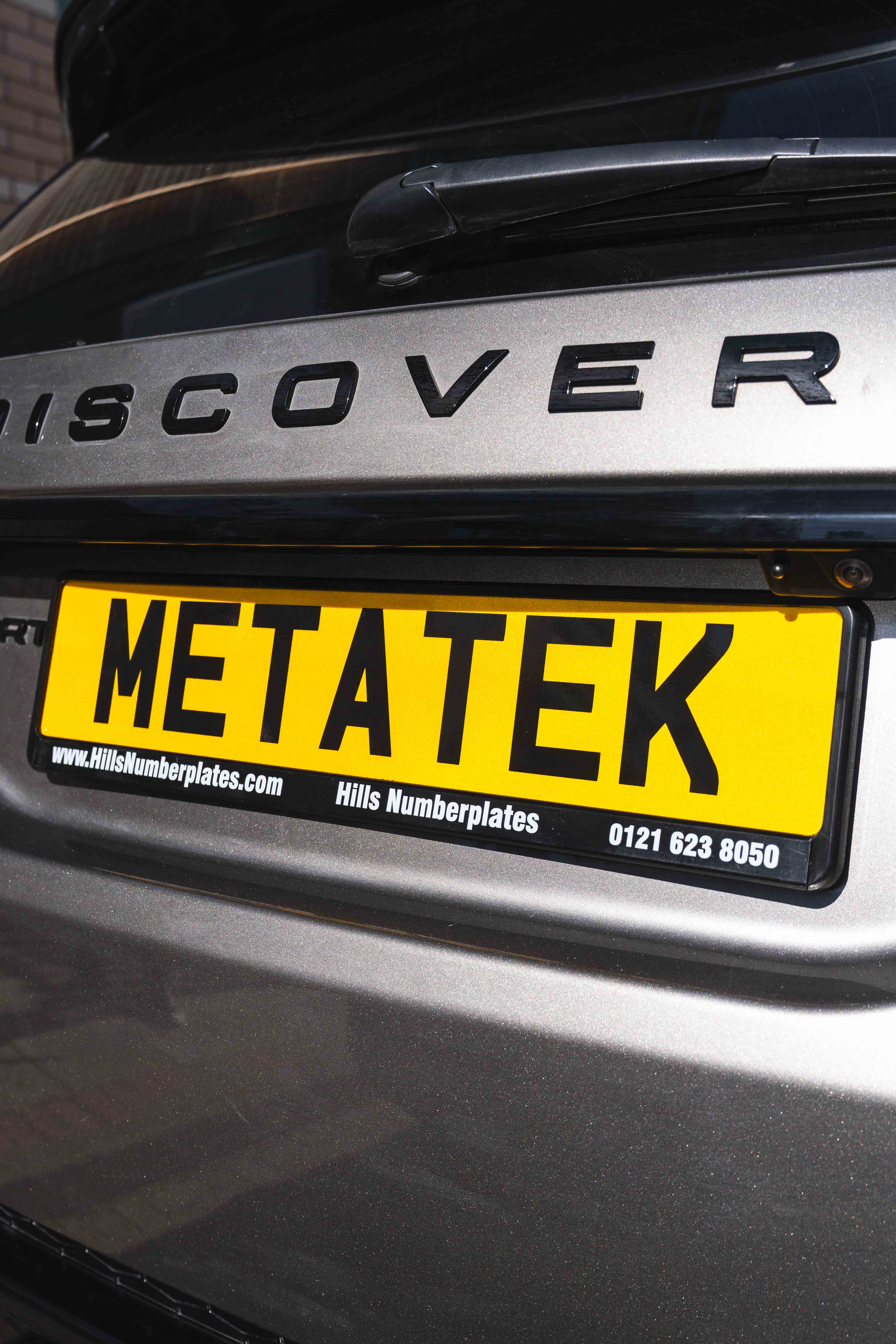
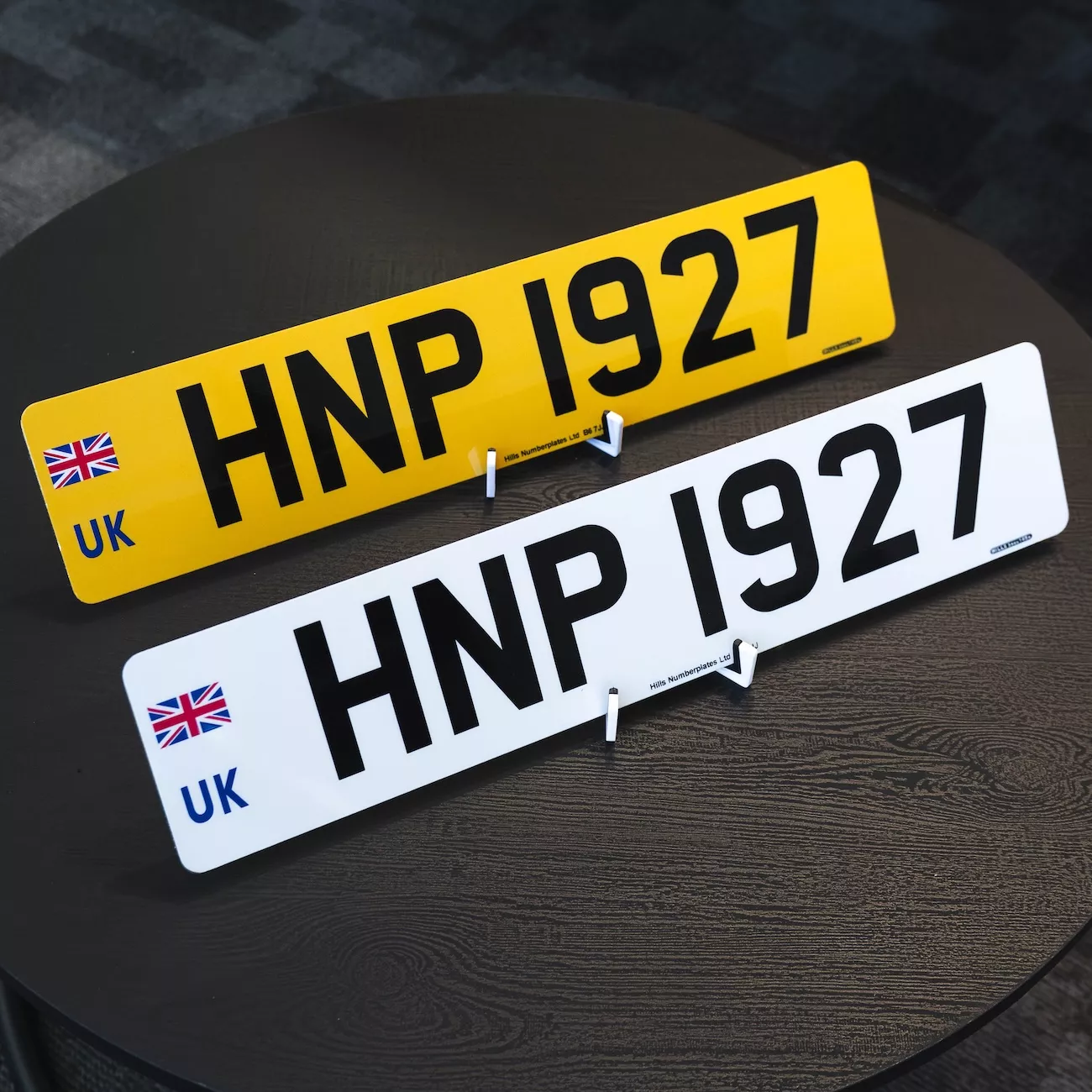
A 4D number plate has characters that physically stand out from the surface rather than being printed flat. Each character is laser-cut from solid black acrylic and bonded onto the face of a finished plate. The result is a sharp, squared-edge character with a clean, premium look.
You'll also see labels such as "5D" and "6D" used for deeper or layered characters. It's worth being clear on one point from the outset: "4D" and "5D" are marketing terms, not legal categories. The law doesn't care what a plate is called. It cares whether the finished plate meets the required standard.
How A Road-Legal 4D Plate Is Built
A compliant 4D plate starts life as a standard number plate. The registration is printed in full on the reflective background and sealed beneath clear acrylic, exactly as it would be on a flat plate. The raised black acrylic digits are then bonded precisely over the printed characters.
Two details separate a properly made 4D plate from a risky one:
- The registration is printed underneath the digits. If a digit is ever damaged or comes away, whether in transit, in a car wash or on the road, the registration is still fully visible and readable.
- The digits are no thicker than 3mm. Deeper characters can cast shadows and obscure one another when viewed from an angle, making the plate harder for people and cameras to read.
How The Most Common Styles Compare
- Standard printed plates: characters printed on reflective sheeting beneath clear acrylic. These are road legal when correctly made. The most common problem is missing BS AU 145e or supplier markings.
- 4D acrylic plates: solid black acrylic digits, no thicker than 3mm, bonded over a printed registration. These are road legal when compliant. They most often fail because of incorrect spacing, oversized digits or no printed registration beneath.
- Two-tone or "high-line" 3D plates: printed characters with shading or outlines that mimic depth. These are not road legal because the characters aren't a single shade of black.
- Krystal or neon 4D plates: acrylic characters with clear or coloured sections. These are not road legal, because the characters aren't solid black.
- Carbon-effect 4D plates: characters with a patterned or carbon-fibre finish. These are not road legal, for the same reason.
If a flat, classic finish suits your customers better, our acrylic made-up number plates are the everyday standard, made to the same British Standard.
What Does UK Law Say About Raised Characters?
UK law explicitly allows raised characters on number plates, as long as the plate meets every other requirement. Three sets of rules work together here.
The Road Vehicles (Display Of Registration Marks) Regulations 2001
This is the legislation itself. It sets out how a registration must be displayed:
- the prescribed font
- character height, width and stroke
- spacing between characters and groups
- colours and reflectivity
GOV.UK's guidance, which summarises these rules, confirms that number plates can have raised characters. It also confirms that the characters must not be removable or reflective.
BS AU 145e And The Changes On 1 September 2021
BS AU 145e is the British Standard every new number plate must meet. It became mandatory for plates fitted from 1 September 2021, and it tightened the rules for raised characters in one crucial way: characters must now be a single shade of black. That single requirement is what made two-tone, highlighted and carbon-effect digits illegal overnight.
Every compliant plate must also carry:
- the BS AU 145e mark and the manufacturer's name, in the bottom right corner
- the supplying outlet's name and postcode, in the bottom centre, in a single non-reflective colour
For a full breakdown of what the standard means for your business, see our guide on what the latest number plate standard means for dealerships and car fleets.
DVLA Leaflet INF104
The DVLA's INF104 leaflet sets out the exact character dimensions, spacing and layouts. A raised character still has to fit these measurements precisely. Making a character thicker, taller or closer to its neighbour for effect makes the plate illegal, however well it's made. You'll find a wider overview on our legislation page.
Why Raised Characters Must Be Solid Black
Knowing why the rule exists makes it much easier to spot a plate that breaks it.
How ANPR Cameras Read Number Plates
Automatic Number Plate Recognition (ANPR) cameras are used by police forces, clean air zones, car parks and toll operators across the UK. Many of them read plates using near-infrared light rather than the visible light our eyes rely on. Under infrared, a solid black character stands out sharply against the reflective background. A character that is clear, coloured, tinted or two-toned can lose that contrast. It may look perfectly readable to a person but appear faint, broken or invisible to a camera.
The Near-Infrared Test Under BS AU 145e
That is exactly why BS AU 145e introduced a near-infrared test alongside a new abrasion test. It is also why the British Number Plate Manufacturers Association (BNMA) is clear that 4D plates with clear or coloured parts in the digits, often sold as "Krystal" or "Neon" plates, are illegal.
The same logic explains the current crackdown on "ghost plates": plates deliberately treated so cameras can't read them. A properly made 4D plate isn't a ghost plate. However, a cheap one with the wrong materials can fail in the same way without the driver ever knowing.
When Do 4D Plates Become Illegal?
A 4D plate becomes illegal the moment it breaks any single rule. The most common problems we see are:
- Characters that aren't solid black, including coloured, clear, tinted, mirrored, carbon-effect or glitter finishes
- Highlighting or shadow effects, such as outlines, gradients or two-tone edges designed to exaggerate depth
- Digits thicker than 3mm, often sold as "5D" or "deep" styles
- No printed registration beneath the digits, leaving the plate unreadable if a digit is lost.
- Non-standard fonts, including italic, stylised or "sport" lettering
- Altered spacing, where characters are moved closer or further apart to spell a name or word
- Missing markings, meaning no BS AU 145e mark, no manufacturer name or no supplier name and postcode
- Removable or loose characters, including digits that have lifted, or plates with parts missing
- Background patterns, which are not permitted on any road-legal plate
Why Show Plates Are Not Road Legal
Many retailers sell decorative styles "for show use only". These plates can legally be made, but they must never be fitted to a vehicle driven on a public road. For dealerships that want full branding on the forecourt, showroom plates are the right way to do it.
Are 3D Plates Fitted Before September 2021 Still Legal?
Yes, provided they were legal at the time. Plates made to the previous standard, BS AU 145d, can stay on a vehicle as long as they were fitted on or before 31 August 2021.
The catch comes when those plates are replaced. Any new plate, including a replacement for a damaged or stolen one, must meet BS AU 145e. So a style that was legal in 2020, such as a two-tone 3D plate, can't be reproduced today.
For dealerships, this is worth remembering with part-exchange vehicles. A customer's older plates may be perfectly legal, but you can't order an identical replacement if the style no longer complies.
How To Check A 4D Number Plate Is Road Legal.
Whether you're prepping a vehicle for handover or checking your own car, these eight checks take just a couple of minutes:
- Look for the BS AU 145e mark and the manufacturer's name in the bottom right corner of the plate.
- Check the supplier details in the bottom centre, showing the name and postcode of the outlet that supplied the plate.
- Confirm the characters are solid black, with no colour, transparency, sheen or outline when viewed from different angles.
- Check the digit depth, making sure the raised characters are no thicker than 3mm.
- Confirm the registration is printed beneath the digits by checking with your supplier or looking closely at the edges of each character.
- Check the font and spacing against the standard Charles Wright typeface, with the registration grouped exactly as it appears on the V5C.
- Check that the background is reflective white at the front and reflective yellow at the rear, with no pattern.
- Test the fixing by pressing each raised character gently to make sure none are lifting, and confirm the plate is securely attached to the vehicle.
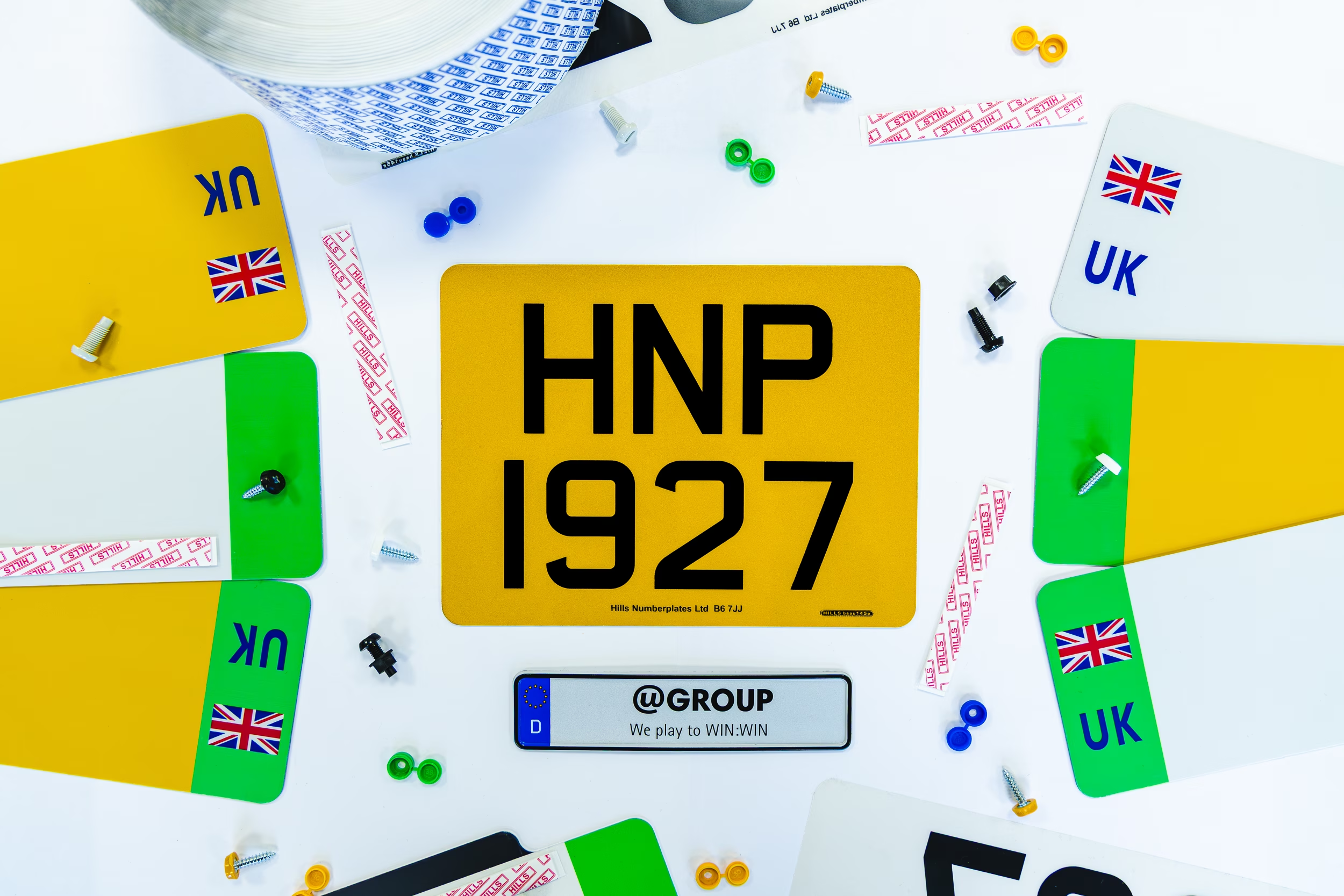
On that last point, the BNMA recommends adhesive pads as the preferred fixing method under BS AU 145e. You'll find the right number plate fixings in our components range.
Will 4D Plates Pass An MOT?
A compliant 4D plate will pass an MOT in the same way as a standard printed plate. Testers check that plates are:
- secure
- legible
- the correct colours
- in the prescribed font and spacing
- correctly marked
Raised characters on their own are not a reason to fail.
What Are The Penalties For Illegal 4D Plates?
A non-compliant plate is a different story. Driving with incorrectly displayed number plates can lead to a fine of up to £1,000, and the vehicle will fail its MOT. For motorists with personalised registrations, the DVLA can also withdraw a registration that is repeatedly displayed illegally.
Do You Need To Tell Your Insurer About 4D Plates?
There's conflicting advice online, so here's a balanced view. A compliant 4D plate isn't illegal, and many insurers don't treat it as a modification. However, some policies define modifications broadly enough to include cosmetic changes.
The safest approach is simple: check your policy wording, or ask your insurer. It takes a few minutes and removes any doubt if you ever need to make a claim.
Who Is Responsible For 4D Plate Compliance In The Motor Trade?
This is the question most online guides skip, and it's the one that matters most to dealers, resellers and fitters. Legal responsibility for a number plate doesn't sit with one party alone.
The Supplier's Legal Duty
Anyone who makes or sells number plates in the UK must be registered with the DVLA's Register of Number Plate Suppliers (RNPS). It is an offence to supply a plate that doesn't meet the British Standard, or that claims to meet it and doesn't. If you sell or fit 4D plates, you share responsibility for what leaves your premises.
Document Checks Before Supplying Plates
Registered suppliers must see original documents proving the customer's identity and their entitlement to the registration before supplying a plate. Scanned or photographed documents are not acceptable. Proof of entitlement usually means a V5C, V750 or V778. Records of each sale must be kept, and DVLA inspections are becoming more frequent as enforcement tightens.
Questions To Ask Your 4D Plate Supplier
Before adding a 4D range to your offer, ask:
- Can you provide a certificate of conformity to BS AU 145e?
- What material are the raised characters made from, and is it solid black throughout?
- How thick are the digits, and are any of your styles deeper than 3mm?
- Is the registration printed beneath the raised digits on every plate?
- What adhesive is used to bond the characters, and how is it tested?
- Are you registered with the RNPS, and what is your supplier number?
- How do you handle replacements if a character becomes detached?
A reputable supplier will answer every one of these without hesitation. For a wider view, read our guide on how to choose a number plate supplier for your dealership.
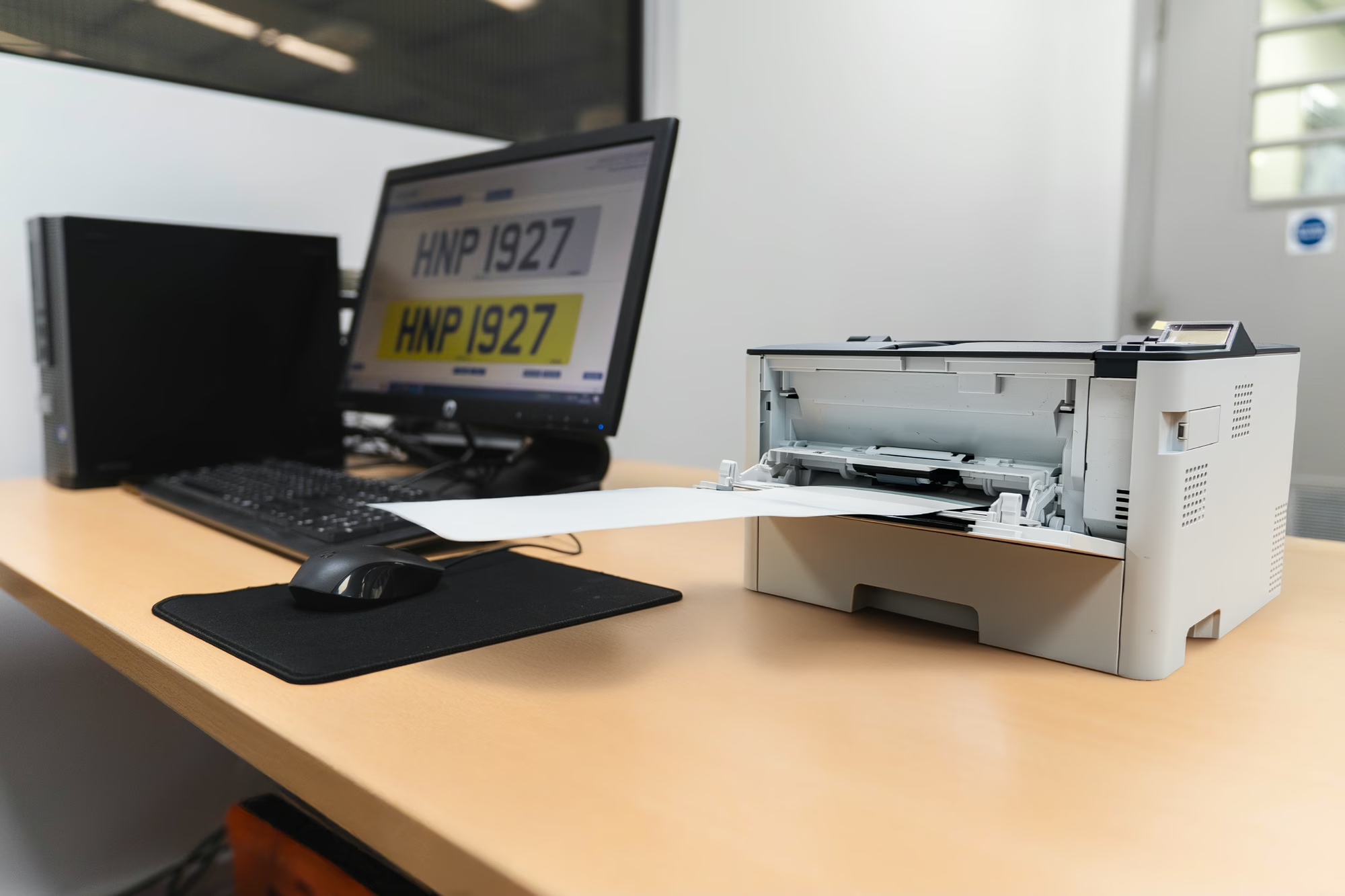
Producing 4D Plates In-House
Many garages and dealer groups now produce plates on site. The same rules apply:
- every component must meet BS AU 145e
- the registration must be printed in full before the digits are applied
- the digits must be no thicker than 3mm
- The finished plate must carry the correct markings.
If you're building or upgrading an in-house setup, our acrylic self-assembly printing systems and acrylic number plate components are designed to keep every plate compliant.
Can You Fit 4D Plates To Motorcycles, EVs And Plates With Flags?
- Motorcycles: raised characters are permitted on motorcycle plates, but the registration must be displayed on two lines. Bikes registered from 1 September 2001 display a rear plate only.
- Electric vehicles: zero-emission vehicles can combine 4D characters with the optional green flash. Hybrids are not eligible.
- Flags and identifiers: a 4D plate can carry an approved national flag or identifier, including the UK identifier with the Union flag, which is recognised for driving in most countries abroad.
How uGroup UK Makes UltraTek 4D Number Plates
Our UltraTek 4D number plates were developed for trade customers who want the premium look of raised characters with no compromise on compliance:
- Each character is laser-cut from 3mm gloss black acrylic.
- The registration is printed in full beneath the raised digits, so the plate stays readable if a digit is ever damaged
- Characters are bonded with high-performance 3M adhesive
- Every plate is made to BS AU 145e, with full manufacturer and supplier markings.
- Plates are PlateFix compatible for secure, professional fitting.
For dealerships, it means offering customers a genuine upgrade at handover without adding compliance risk to the sale. For resellers, it means a premium product you can sell with confidence. Explore our full range of road-legal 4D number plates for trade to see the finish for yourself.
Frequently Asked Questions
Are 5D Number Plates Legal?
In most cases, no. "5D" is a marketing term usually used for characters deeper than 3mm or built up in layers. A road-legal raised character should be no thicker than 3mm, solid black, in the standard font and spacing, and bonded over a printed registration on a BS AU 145e plate.
Are Neon Or Krystal 4D Plates Legal?
No. Characters with clear, coloured or illuminated sections are not solid black, so they fail BS AU 145e and are illegal on the road.
Are Carbon 4D Plates Legal?
No. Carbon-effect or patterned characters are not a single shade of black. They have been illegal on any plate supplied or fitted since 1 September 2021.
What Happens If A 4D Digit Falls Off?
On a properly made 4D plate, the registration is printed in full beneath the raised digits, so it remains visible and readable. The damaged plate should still be replaced as soon as possible, as a plate with missing or loose characters no longer meets the standard.
Is There A Maximum Depth For 4D Characters?
Yes. Raised characters should be no thicker than 3mm. Deeper characters can cast shadows and obscure one another when viewed from an angle, making the plate harder for people and ANPR cameras to read.
Can The Police Stop Me For 4D Plates?
The police can stop any vehicle whose plates appear not to comply. A correctly made 4D plate gives them no reason to take action. A non-compliant one can result in a fine of up to £1,000.
Do 4D Plates Have To Come From A Registered Supplier?
Yes. All number plates for road use must be supplied by a business registered with the DVLA's Register of Number Plate Suppliers, which will ask to see original identity and entitlement documents.
Can I Have 4D Plates On A Classic Car?
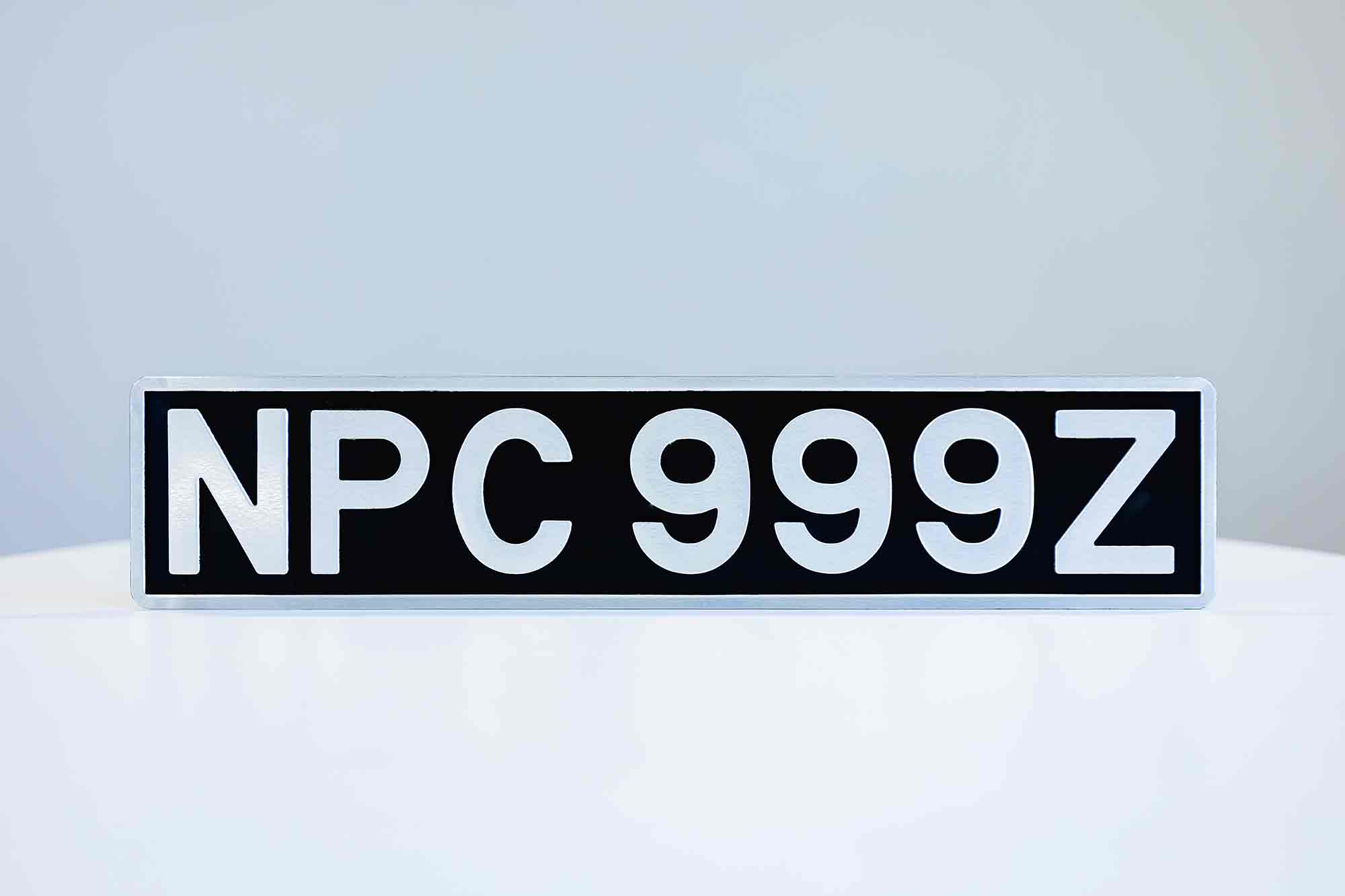
Classic vehicles on standard white and yellow plates follow the same rules as any other car. Vehicles built before 1 January 1980 and taxed in the historic vehicle class can instead display traditional silver and black number plates.
Choosing Road-Legal 4D Plates With Confidence
4D number plates are legal in the UK, but compliance comes down to details:
- solid black digits no thicker than 3mm
- a registration printed beneath them
- the correct font and spacing
- BS AU 145e markings
- a registered supplier
Get those right and 4D plates are a safe, premium upgrade. Get them wrong, and the cost falls on the driver, the dealership or both.
At uGroup UK, compliance is built into everything we make, from standard acrylic plates to our UltraTek 4D range. If you're a dealership, fleet operator or reseller looking for a supplier you can rely on. Contact uGroup UK.





.webp)

_EV_Recognition.svg)