UK Number Plate Legislation in 2026: Everything You Need to Know
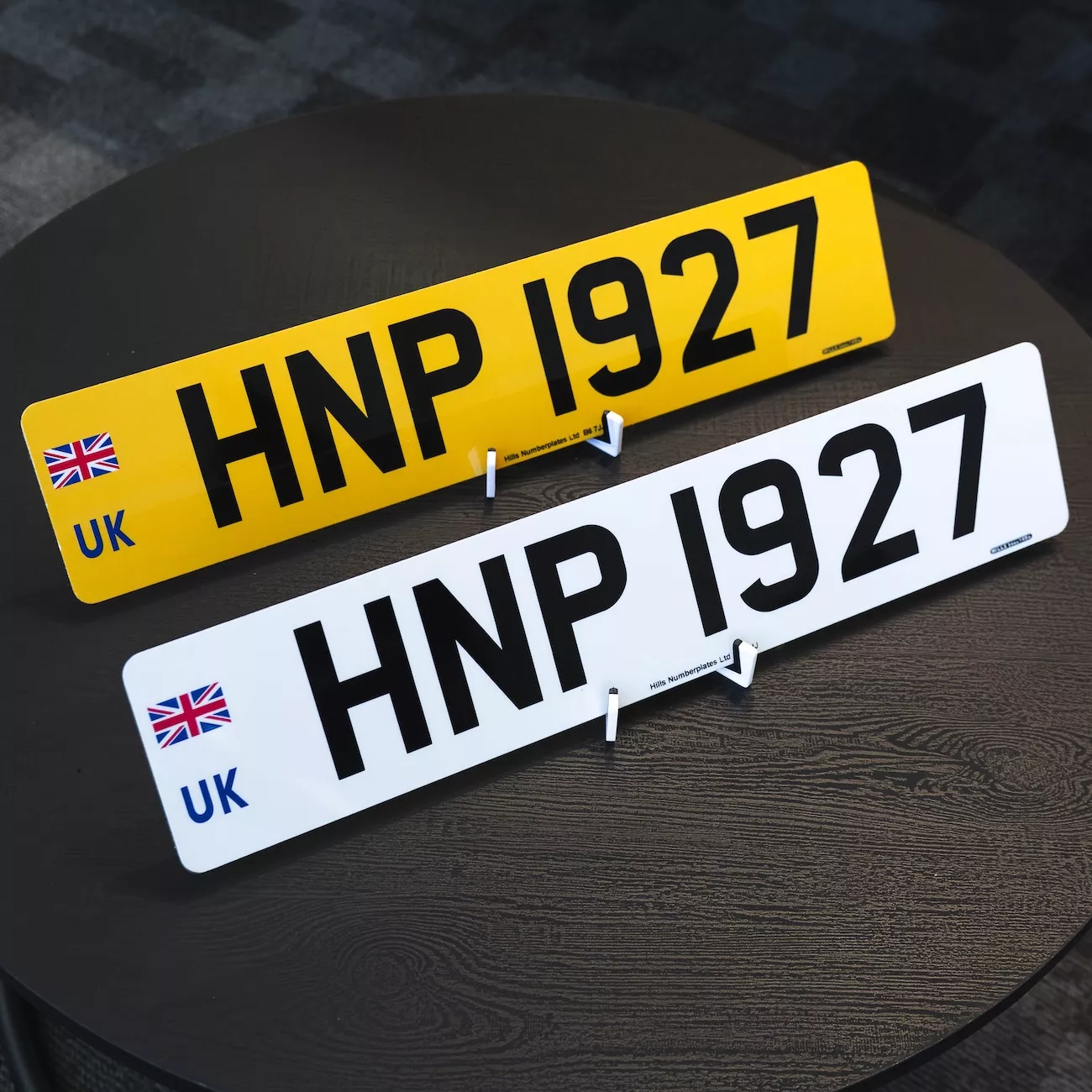
UK number plate law is set out in the Road Vehicles (Display of Registration Marks) Regulations 2001 and DVLA leaflet INF104. Every plate must show black characters in the mandatory font, on a reflective white front plate and yellow rear plate. Plates fitted from 1 September 2021 must meet British Standard BS AU 145e and carry the supplier’s name and postcode. A non-compliant plate can lead to a fine of up to £1,000.
Number plate rules can seem complicated, especially with new standards, optional identifiers and changing styles. This guide brings together everything dealerships, fleet operators, resellers and drivers need to know about UK number plate legislation in 2026. Each section explains the rules clearly and links to our more detailed guides where relevant.
Who Sets and Enforces Number Plate Rules?
The rules for how number plates must look and be displayed are set by law and published by the DVLA. Here’s who does what:
- The DVLA sets the display rules, runs the Register of Number Plate Suppliers and can withdraw a registration number that is being misused.
- The police enforce the rules on the road and can issue fines.
- MOT testers check that plates are legal, and a non-compliant plate will fail the MOT.
- Registered number plate suppliers must make plates to the British Standard and check the customer’s identity and entitlement to the registration before supplying them.
BS AU 145e: The Current British Standard
Every number plate fitted on or after 1 September 2021 must meet British Standard BS AU 145e. The standard was introduced to make plates tougher, easier to read and harder to tamper with. It sets requirements for:
- Durability: plates must withstand abrasion, impact and weather.
- Reflectivity and legibility: plates must be readable by the human eye and by ANPR cameras.
- Character colour: characters must be a single shade of black, so dual-tone or shadow effects are no longer allowed.
Plates fitted before 1 September 2021 to the previous standard, BS AU 145d, remain legal. Any replacement plate made today must meet BS AU 145e. For a full breakdown of what the standard means for businesses, read our guide to BS AU 145e for dealerships and fleets.
Required Supplier Markings
Every road-legal number plate must be marked with:
- The British Standard number, BS AU 145e
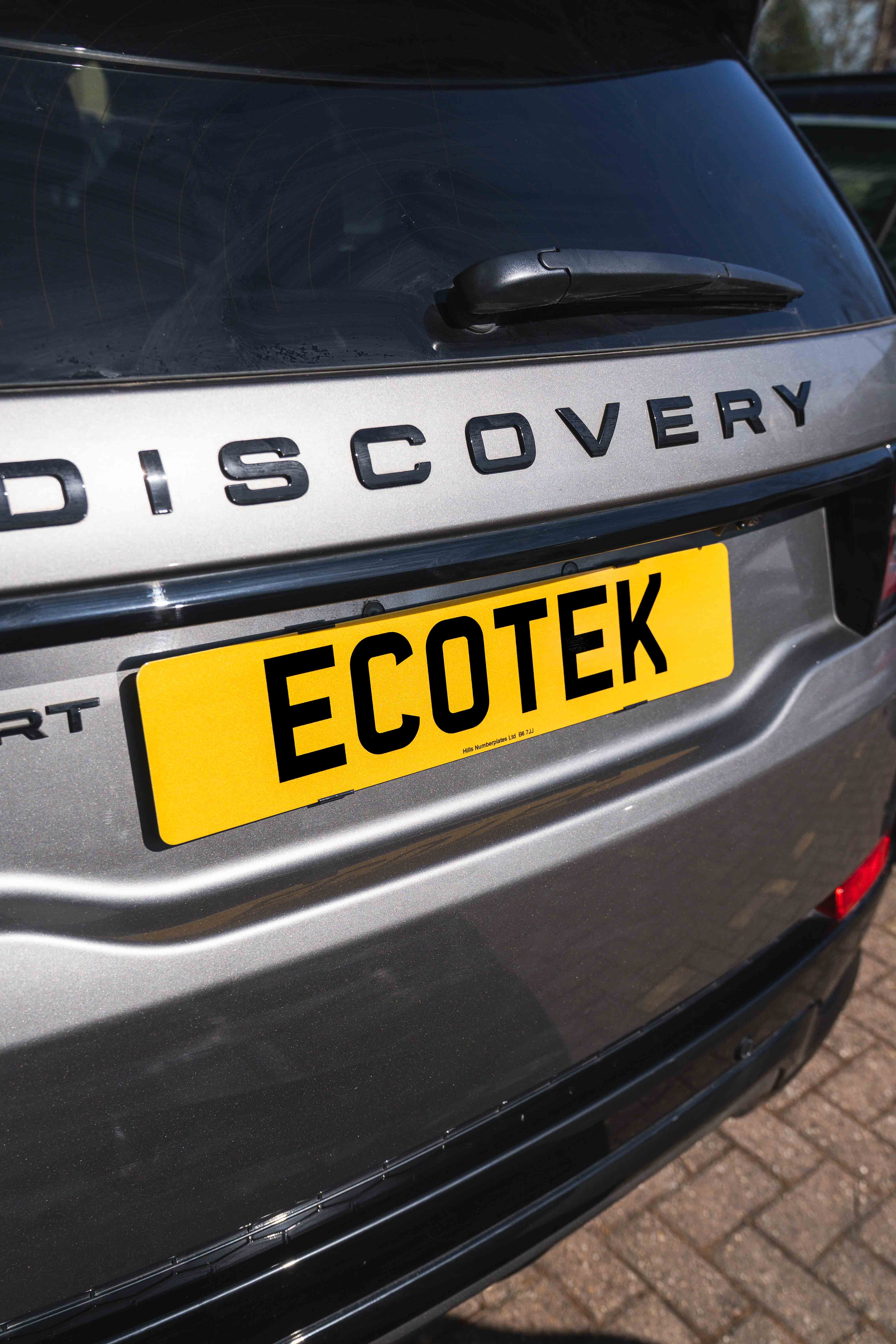
- The name and postcode of the registered supplier who made the plate
These markings make every plate traceable to the business that produced it, which helps the authorities tackle cloned and illegal plates. A plate with no markings, or with incomplete ones, is not road legal. When choosing a supplier, this is one of the first things to check. Our guide on how to choose a number plate supplier for your dealership covers this in more detail.
Number Plate Size, Font and Spacing
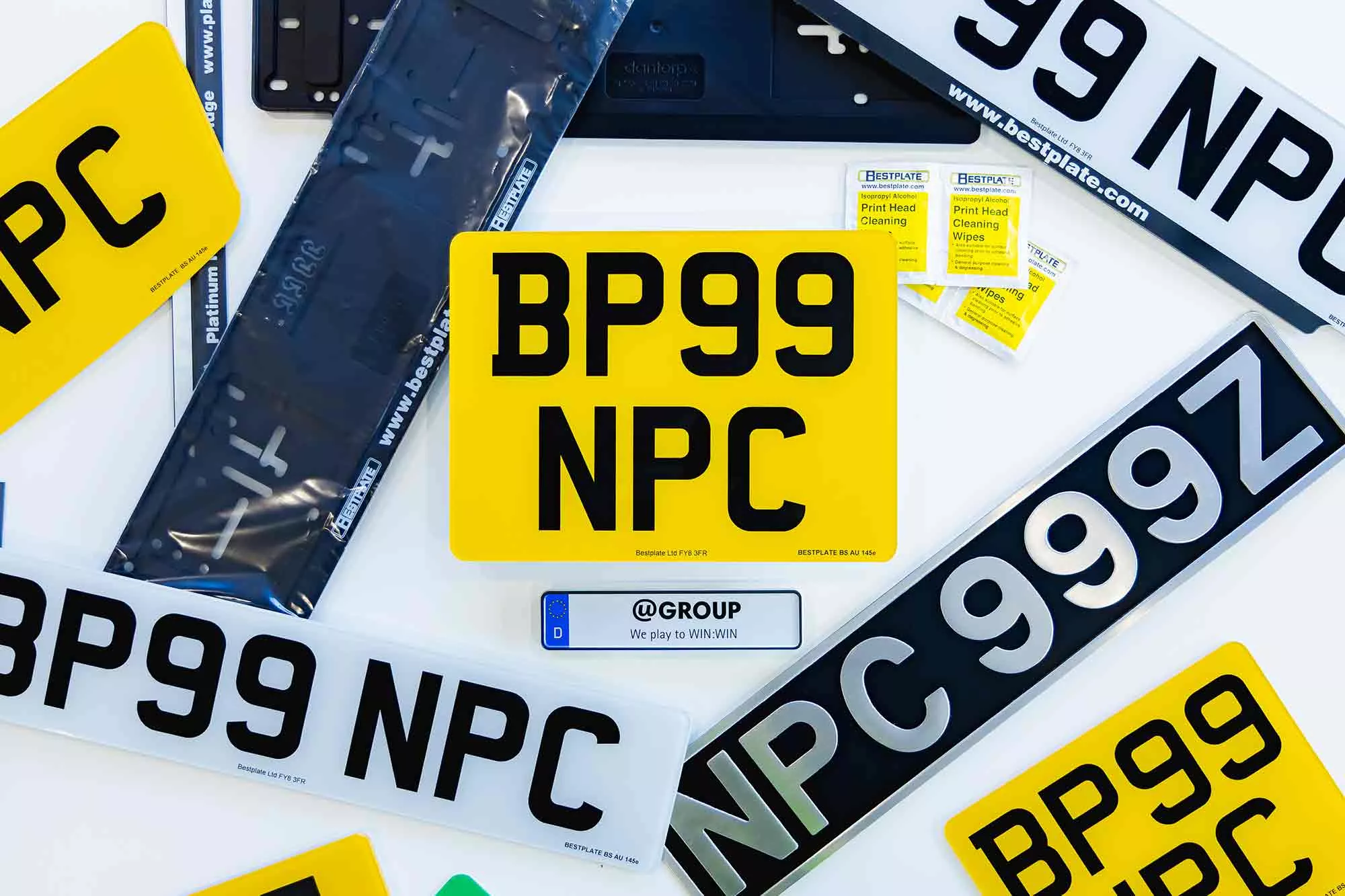
The overall size of a number plate is not fixed by law. The standard 520mm x 111mm oblong plate is the most common, but other shapes and sizes are allowed as long as the characters, spacing and margins meet the legal requirements.
The law sets the size of the characters themselves. For plates on cars and other vehicles registered from 1 September 2001:
- Character height: 79mm
- Character width: 50mm (except the number 1 and the letter I)
- Character stroke: 14mm
- Space between characters: 11mm
- Space between the two groups of characters: 33mm
- Top, bottom and side margins: at least 11mm
- Vertical gap between lines on a two-line plate: 19mm
Characters must use the mandatory Charles Wright font. Italic, script or stylised fonts are illegal, and so is changing the spacing to make the registration spell a word or name.
Colours and Backgrounds
Standard UK number plates must display:
- Black characters on a reflective white background on the front plate
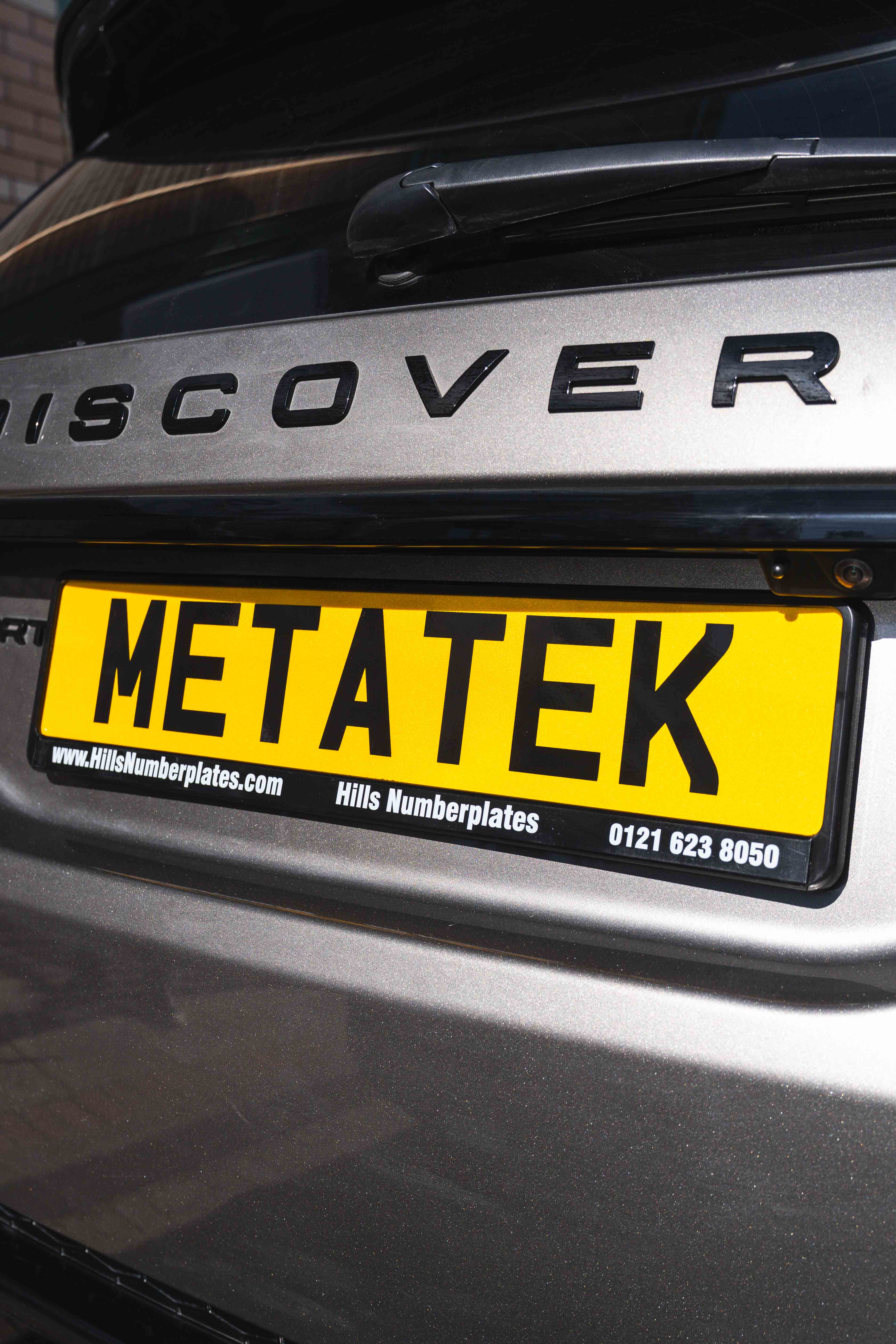
- Black characters on a reflective yellow background on the rear plate
Backgrounds must be plain, with no patterns, textures or images. Tinted covers, smoked finishes and anything that changes how the plate looks to the eye or to a camera are illegal.
Fitting and Positioning Number Plates
Number plates must be fixed securely to the front and rear of the vehicle, upright or as close to upright as possible, and kept clean and unobstructed. The rear plate must be lit at night. Tow bars, bike racks and accessories must not cover any part of the plate. If a bike rack hides the rear plate, a legal plate must be fitted to the rack.
Motorcycle Number Plates
Motorcycles and motor tricycles registered on or after 1 September 2001 must only display a number plate at the rear. Their plates must show the registration on two lines, with characters 64mm tall and 44mm wide. Single-line plates are not legal on any motorcycle. Our motorcycle number plate size guide explains the rules in full.
The UK National Identifier and Flags
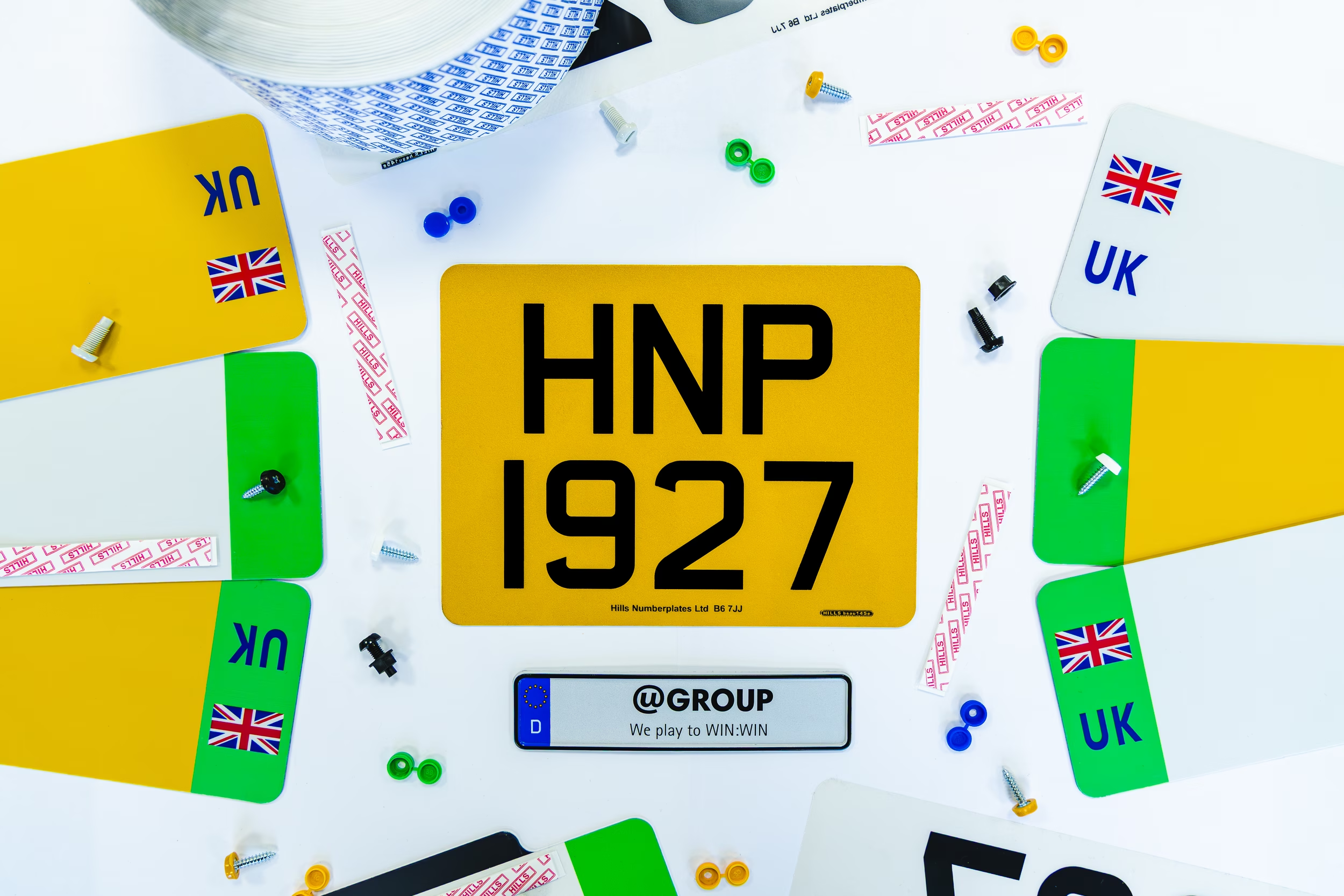
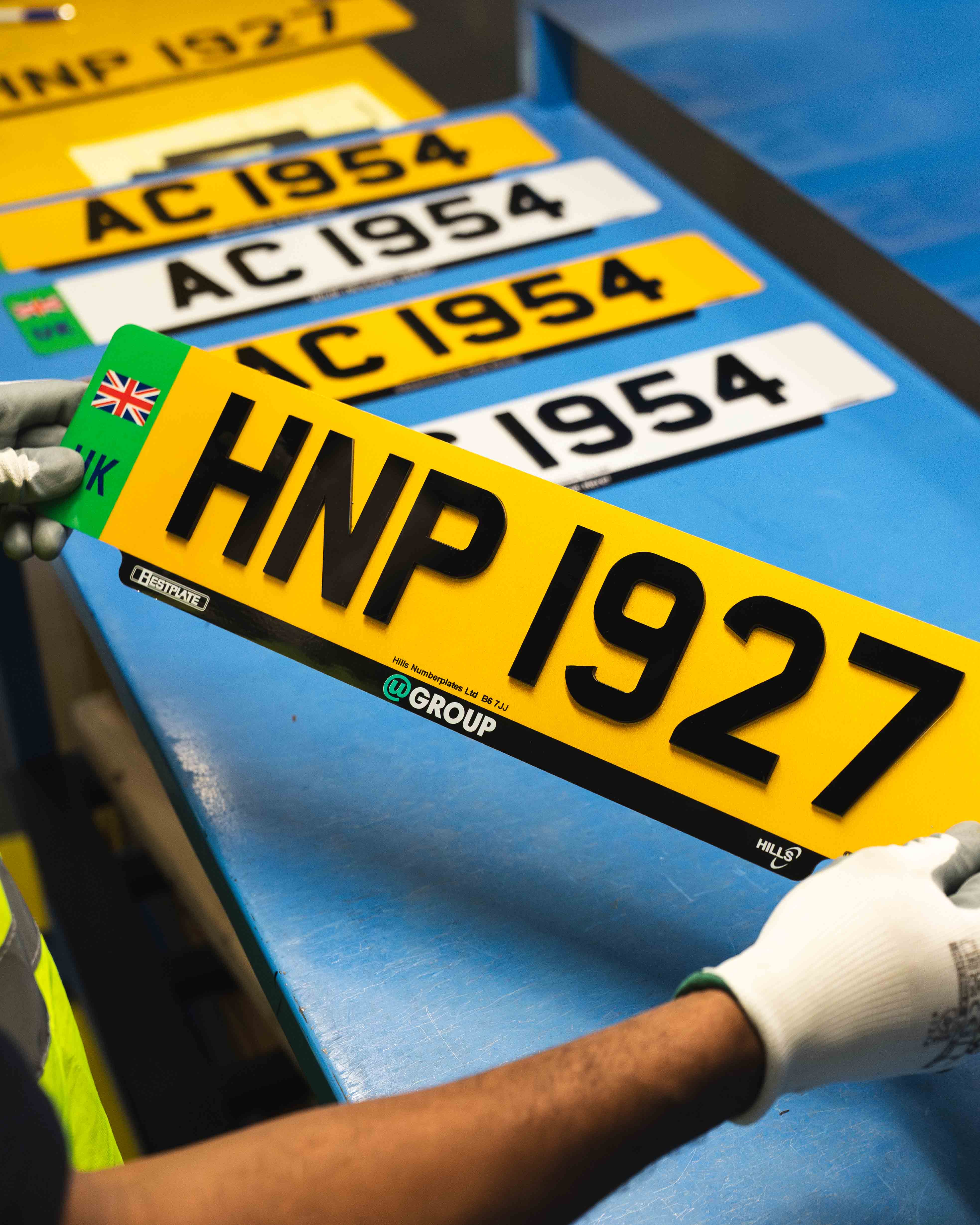
Since 28 September 2021, the UK national identifier has replaced GB. You can choose to display it on the left-hand side of the plate, either on its own or with one of the following flags:
- The Union flag
- The Cross of St George
- The Saltire (Cross of St Andrew)
- The Red Dragon of Wales
No other flags, logos or symbols are allowed. Displaying the UK identifier is optional within the UK. If you drive abroad, check the latest GOV.UK guidance before you travel, because some countries also require a separate UK sticker.
The Green Flash for Zero-Emission Vehicles
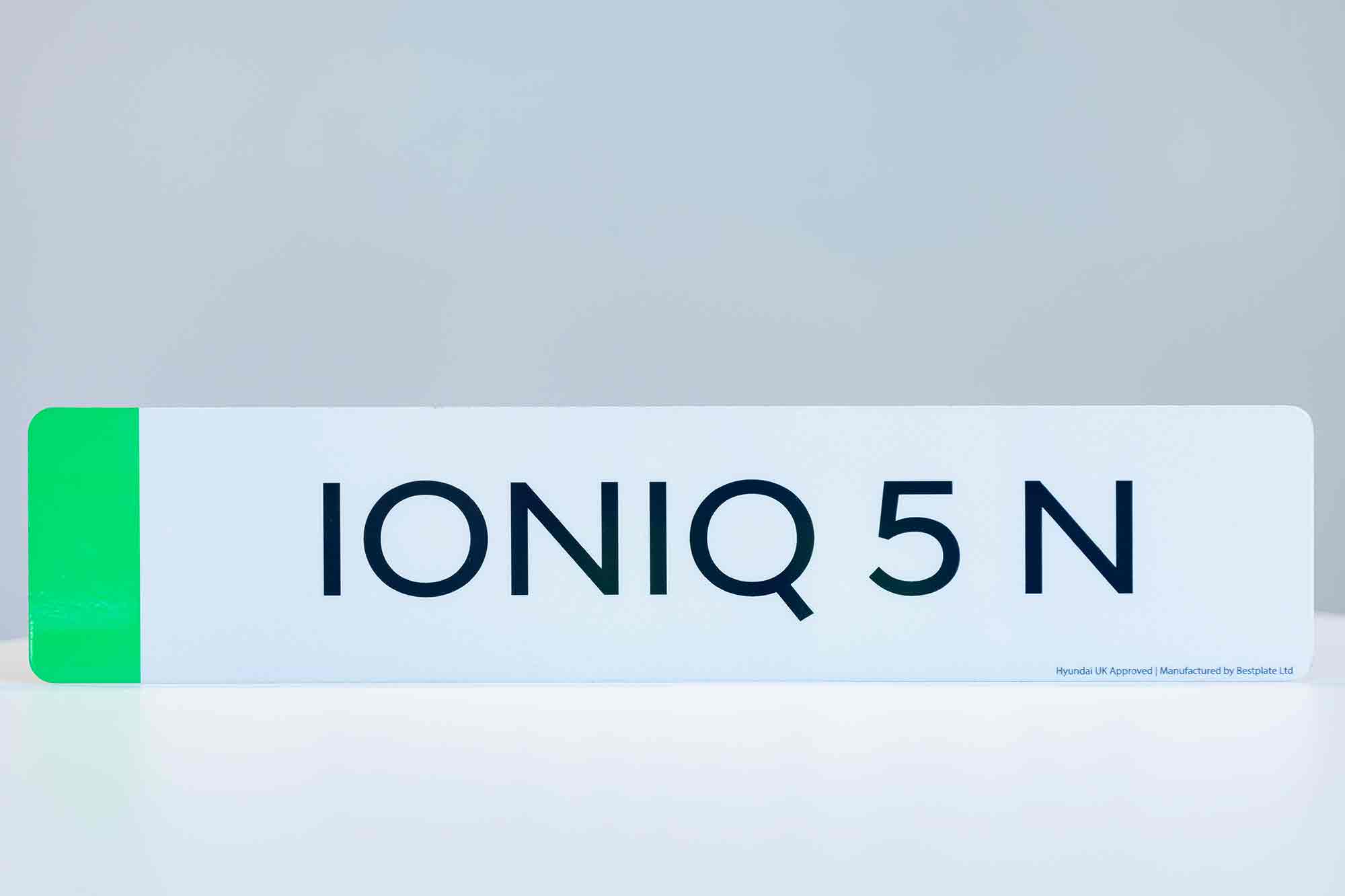
Since December 2020, zero-emission vehicles have been able to display a green flash on the left-hand side of their number plates. The green flash is optional. It is only available to vehicles with zero tailpipe emissions, so hybrids and plug-in hybrids are not eligible. Some local authorities use it to identify vehicles that may qualify for incentives, such as cheaper parking.
Black and Silver Number Plates
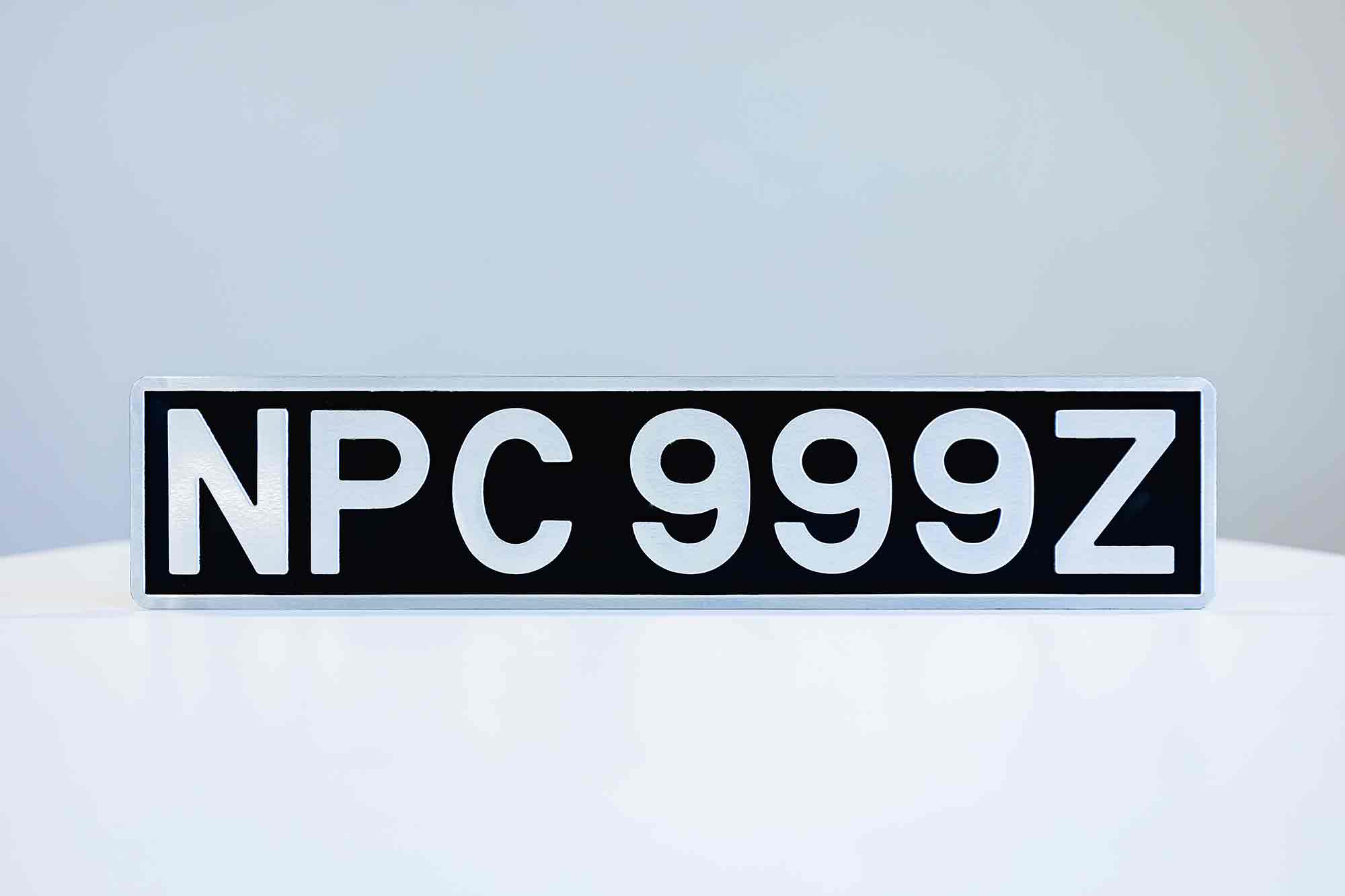
Traditional black and silver plates, with white, silver or grey characters on a black background, are only legal on vehicles built before 1 January 1980 that are registered in the historic vehicle tax class. Fitting them to a newer vehicle, or to an older vehicle that is not in the historic class, is not legal. Explore our range of Silver & Black Number Plates for eligible classic vehicles.
4D and Raised Number Plates
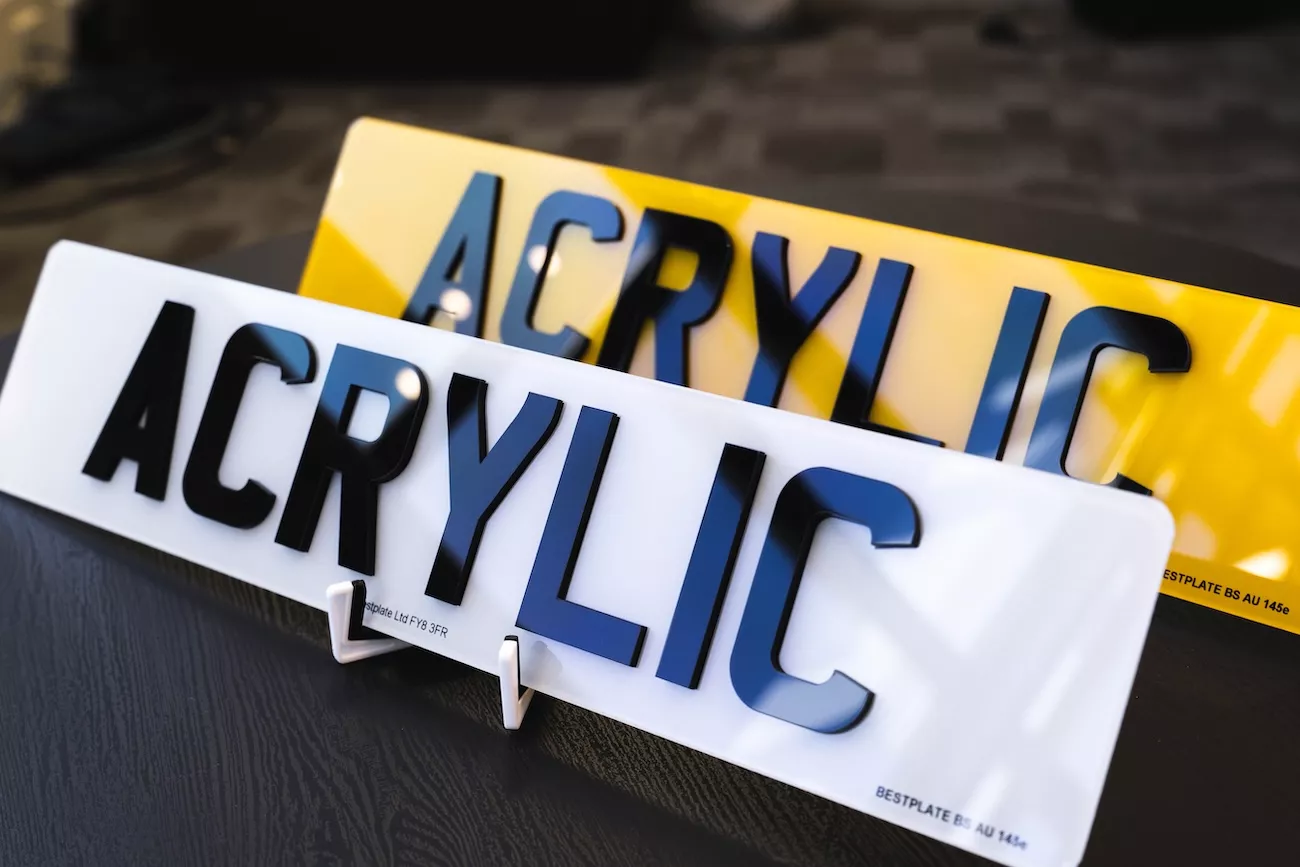
4D number plates, with raised acrylic characters, are legal in the UK when they meet every requirement of BS AU 145e. That means characters in a single shade of black, the correct font and spacing, the right background colours, and the British Standard and supplier markings. 4D plates that don’t meet the standard, for example because of two-tone characters, shadow effects or missing markings, are illegal.
For uGroup UK’s own 4D plates, we also keep raised characters no thicker than 3mm and print the registration underneath the raised characters, so the plate stays readable even if a character is damaged or lost. You can find out more in our guide on whether 4D number plates are legal in the UK, or explore our UltraTek 4D Plates.
Pressed Number Plates
Pressed metal plates, where the characters are stamped into the plate, are legal if they meet the same rules as any other plate: the current British Standard, the correct font, spacing and colours, and the required markings.
What’s Changing in 2026: The Crackdown on Ghost Plates
Illegal number plates are a major focus for the government and police in 2026. In particular, attention is on ghost plates, which are modified or coated so that ANPR cameras can’t read them, and on cloned plates, which copy another vehicle’s registration.
The Department for Transport’s Road Safety Strategy, published in January 2026, includes commitments to tackle illegal and ghost plates, including a consultation on tougher penalties such as penalty points. Police forces and local authorities are also investing in camera technology to detect plates that ANPR can’t read.
For motor trade businesses, this makes it more important than ever to source plates from a reputable, registered supplier and to keep accurate records of every plate you produce or fit.
Penalties for Illegal Number Plates
Driving with a number plate that doesn’t meet the rules can lead to:
- A fine of up to £1,000
- An MOT failure
- The DVLA withdrawing the registration number, in some cases
These penalties apply whatever the reason the plate is non-compliant, from incorrect fonts and spacing to missing markings or unapproved flags.
Common Number Plate Mistakes to Avoid
- Stylised or italic fonts, or spacing changed to spell out a word or name
- Characters in more than one shade of black, or with shadow effects
- 4D or raised plates that don’t meet BS AU 145e
- Missing British Standard or supplier markings
- Unapproved flags, logos or emblems
- Tinted covers or reflective coatings
- Black and silver plates on vehicles that aren’t eligible
- Plates covered by bike racks, tow bars or dirt
Compliant Number Plates From uGroup UK
uGroup UK brings together Hills Numberplates and Bestplate to supply the motor trade with fully compliant number plates, components and self-assembly systems. Whether you’re a dealer group, fleet operator or plate reseller, we help you produce plates that meet BS AU 145e and every DVLA requirement, every time.
If you have a question about number plate legislation or want to review your current plate supply, contact the uGroup UK team and we’ll be happy to help.
Number Plate Legislation FAQs
What is the legal size of a UK number plate?
There isn’t one. The law sets the size, font and spacing of the characters, not the plate. The 520mm x 111mm plate is the most common size.
Are 4D number plates legal in 2026?
Yes, if they meet BS AU 145e. That includes single-shade black characters, the correct font and spacing, and the British Standard and supplier markings.
Who can have black and silver number plates?
Only vehicles built before 1 January 1980 that are registered in the historic vehicle tax class.
What is the fine for an illegal number plate?
Up to £1,000. An illegal plate will also fail the MOT, and the DVLA can withdraw the registration number.
Can I put a flag on my number plate?
Yes, but only the Union flag, the Cross of St George, the Saltire or the Red Dragon of Wales, shown on the left-hand side with the UK identifier.